Books on Cognitive Biases, Mapped to Each Bias
Eight books on cognitive biases, with an index that maps common biases to the books that cover them, from Thinking, Fast and Slow and The Art of Thinking Clearly to Mistakes Were Made, The Righteous Mind and Scout Mindset.
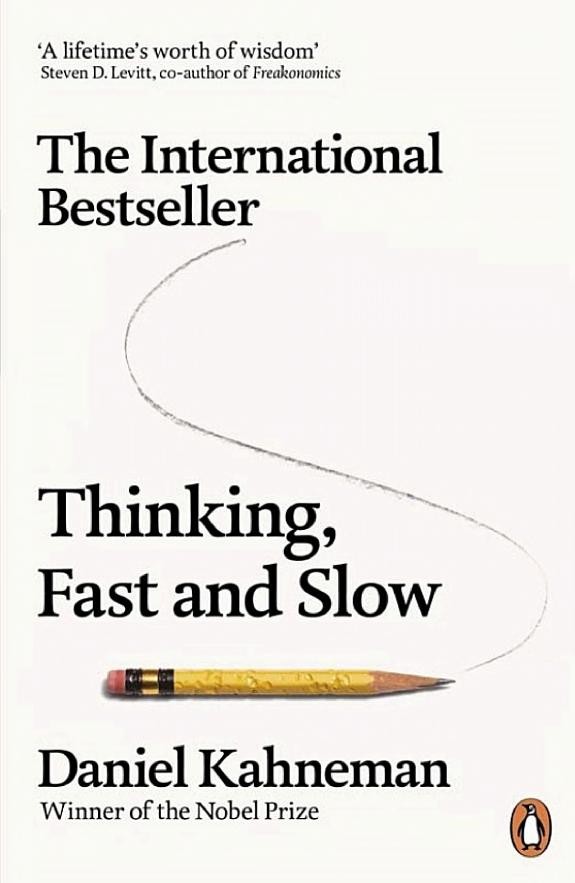 Thinking, Fast and SlowDaniel Kahneman
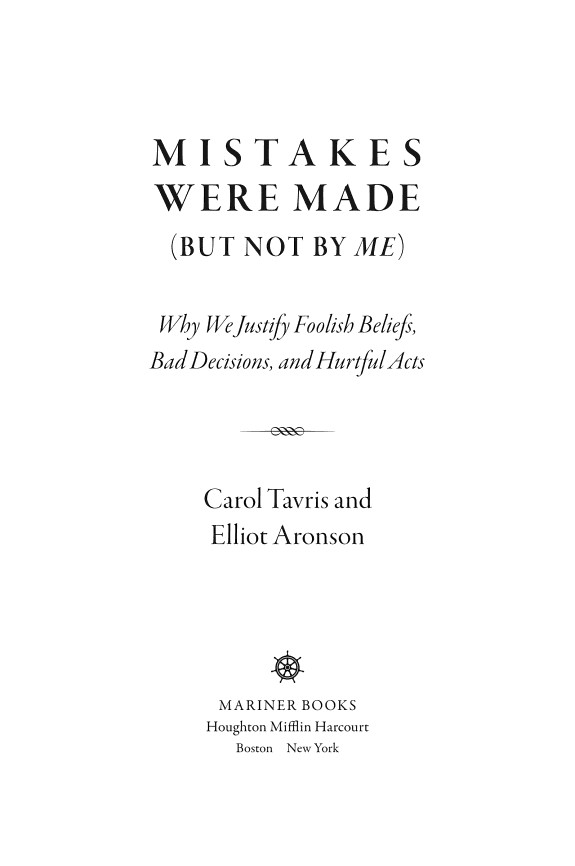 Mistakes Were Made (But Not by Me)Carol Tavris and Elliot Aronson
A cognitive bias is a systematic pattern in how people think that can lead to errors in judgement: we anchor on the first number we hear, favour evidence that supports what we already believe, or stay with a failing project because of what we have already put in. Everyone has these tendencies, and learning their names can make them easier to notice. A good number of books explain them, but they cover different biases, in different ways.
This list gathers eight books on cognitive biases and maps each to the biases it covers, so you can pick the right one for the bias you want to understand. For each book we give the core idea, a ‘play’, a 30-day test, who it suits and one honest weakness. There is also a bias index, a suggested reading order and some frequently asked questions.
How we chose
We looked for books that are widely read, that cover a range of biases from different angles and that suit different readers: researchers’ accounts, collections of short chapters and books on specific themes such as self-justification and moral reasoning. We have not tried to include every book on the subject. The list has eight books, and the index below can help you choose a starting point.
Bias index: where to read about each
This index maps some familiar biases to books on this list that discuss them. It is a guide to themes rather than a chapter-by-chapter listing, so check the contents page of the edition you pick.
| Bias or theme | What it means | Books that cover it |
|---|---|---|
| Anchoring | Being swayed by an initial number or suggestion | Thinking, Fast and Slow, Predictably Irrational |
| Confirmation bias | Favouring information that fits what we already believe | The Art of Thinking Clearly, Mistakes Were Made, Scout Mindset |
| Sunk cost | Continuing because of what is already spent | The Art of Thinking Clearly, Mistakes Were Made |
| Overconfidence | Trusting our own judgement more than the evidence warrants | Thinking, Fast and Slow |
| Self-justification | Defending past choices to avoid discomfort | Mistakes Were Made |
| Affective forecasting | Mispredicting how we will feel about future events | Stumbling on Happiness |
| Motivated reasoning | Reasoning toward the conclusion we want | Scout Mindset, The Righteous Mind |
| Noise (inconsistency) | Different judgements on the same case | Noise |
Knowing the names of biases does not make anyone immune to them, and it is easy to spot a bias in others while missing it in ourselves. A more reliable approach is to build habits and structures that help: writing down your reasoning, seeking disagreement and checking decisions against a simple list. Several of these books suggest this.
Eight books on cognitive biases
1. Thinking, Fast and Slow by Daniel Kahneman
THE IDEA: Kahneman describes two modes of thought, one fast and intuitive and one slower and more deliberate, and surveys decades of research on judgement, including anchoring, availability and overconfidence.
THE PLAY: When an important decision comes up, pause and ask which parts of your thinking are quick impressions and which have been checked.
THE 30-DAY TEST: Write down three decisions this month with the reasoning behind them, then review the notes later.
Who it is for: Readers who want the research foundations of the field from one of its central figures.
One honest weakness: It is a long book with a great deal of detail, so some readers take it in sections over several weeks.
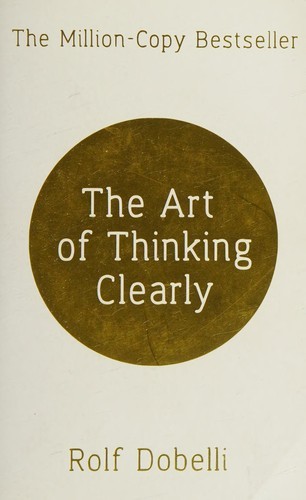
2. The Art of Thinking Clearly by Rolf Dobelli
THE IDEA: In short chapters, Dobelli sets out many common thinking errors, each with a brief explanation and example.
THE PLAY: Choose one bias per week and look for it in your own decisions.
THE 30-DAY TEST: A chapter a week makes a gentle month, with one note on where the bias showed up.
Who it is for: Anyone who prefers short, dip-in chapters to a long argument.
One honest weakness: The chapters are brief by design, so readers who want the underlying research will need to look further.
3. Predictably Irrational by Dan Ariely
THE IDEA: The focus here is experiments: Ariely describes lively studies showing that people make choices in patterned ways that conventional theory does not predict, such as being influenced by irrelevant prices or by the word ‘free’.
THE PLAY: Notice how a price or a comparison on offer changes the way you judge an option.
THE 30-DAY TEST: If you are curious, try one small, harmless test this month, such as comparing your choices when the options are listed in a different order.
Who it is for: Good for people who enjoy short experiments and everyday examples.
One honest weakness: It is a popular account that selects vivid experiments, so it is best read as an introduction rather than a full survey.
4. Mistakes Were Made (But Not by Me) by Carol Tavris and Elliot Aronson
THE IDEA: Cognitive dissonance, the discomfort of holding conflicting ideas, is the lens the authors use to explain how people justify their actions and beliefs, and why admitting mistakes is hard.
THE PLAY: Next time you defend a decision, ask whether you would make the same choice today with fresh eyes.
THE 30-DAY TEST: Over the month, note one decision you would like to defend and write down the strongest argument against it.
Who it is for: Suits readers interested in why people, including themselves, resist changing their minds.
One honest weakness: Many of its examples come from public life, so how relevant they feel will vary from reader to reader.
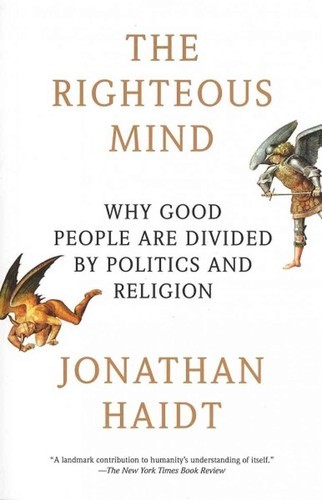
5. The Righteous Mind by Jonathan Haidt
THE IDEA: Haidt, a social psychologist, argues that moral judgements often come first, as intuitions, and reasoning follows to justify them. The book looks at why people with different moral outlooks so often see the same issue differently.
THE PLAY: In a disagreement, try to state the other person’s concern in terms they would accept before explaining yours.
THE 30-DAY TEST: If you like, look for one disagreement this month and describe what each side most values.
Who it is for: People interested in moral psychology, persuasion and disagreement.
One honest weakness: It is about moral reasoning more than a catalogue of biases, so it complements the other books more than it replaces them.
6. Noise by Daniel Kahneman, Olivier Sibony and Cass R. Sunstein
THE IDEA: The authors look at unwanted variability in human judgement, such as different people reaching different conclusions on the same case, and distinguish noise from bias. They suggest ‘decision hygiene’ practices to reduce it.
THE PLAY: For repeated judgements, such as scoring candidates, ask people to assess separately before discussing.
THE 30-DAY TEST: If it suits your team, try independent assessments on one decision and compare them with your usual approach.
Who it is for: Managers and team leads who oversee judgements made again and again.
One honest weakness: Some of its suggestions suit large organisations better than small teams.
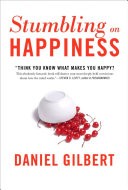
7. Stumbling on Happiness by Daniel T. Gilbert
THE IDEA: Why are people often poor at predicting what will make them happy? Gilbert, a psychologist, looks at the question and at how imagination and memory shape our expectations.
THE PLAY: Before a big choice, ask someone who has been through something similar how it felt.
THE 30-DAY TEST: Jot down a few predictions this month about how you will feel about an upcoming event, then compare them with how you actually felt.
Who it is for: A fit for readers curious about happiness and forecasting how we feel.
One honest weakness: It is more about forecasting feelings than about biases in general, so it sits at the edge of this list.
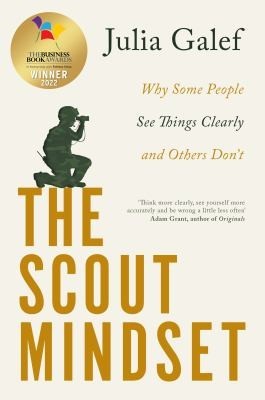
8. Scout Mindset by Julia Galef
THE IDEA: Galef contrasts a ‘soldier’ mindset, which defends what we already believe, with a ‘scout’ mindset, which tries to see things as they are. The book offers ideas for being more honest in your own reasoning.
THE PLAY: When you feel certain about something, ask what evidence would change your mind.
THE 30-DAY TEST: Pick one belief and, at the end of the month, jot down whether you hold it any differently and why.
Who it is for: Helpful for anyone who wants a practical, readable approach to clearer judgement.
One honest weakness: It is about attitude and habits more than formal methods, so it pairs well with a more technical book.
A suggested reading order
- Begin with The Art of Thinking Clearly for short chapters on many biases.
- Read Thinking, Fast and Slow for the research behind them.
- Add Predictably Irrational and Stumbling on Happiness for lively experiments and a look at predicting feelings.
- Read Mistakes Were Made and The Righteous Mind for self-justification and moral reasoning.
- Finish with Noise and Scout Mindset for practices that reduce error in judgement.
Related guides on CROWNLEIGH
A few of our other CROWNLEIGH Book Club guides connect closely with this list:
- Better choices, in our guide to the best books on decision-making.
- Ways of thinking, in our guide to the best books on mental models and critical thinking.
- The wider field, in our behavioural economics reading list.
- Two of Kahneman’s books side by side, in our guide to Thinking, Fast and Slow and Noise.
- Habits of mind, in our guide to books like Mindset.
You can find all of these, and more as we add them, on our CROWNLEIGH Book Club page.
Frequently asked questions
What is the best book on cognitive biases?
For the research behind the field, try Thinking, Fast and Slow. For short chapters on many biases, try The Art of Thinking Clearly. For why people defend their mistakes, try Mistakes Were Made.
How many cognitive biases are there?
There is no single agreed number. Researchers and writers have catalogued well over a hundred, and many overlap or are described in different ways, so it is more useful to learn a handful that matter in your own work than to try to memorise a full list.
Can you overcome cognitive bias?
Most researchers think biases are hard to remove completely, even when people know about them. What tends to help more is changing the situation: writing down your reasoning, seeking out disagreement, using checklists and making important judgements independently before discussing them.
A closing thought
Learning about biases is most useful when it makes us a little more curious about our own thinking. You might pick one bias from the index, look for it in your own week and see what you notice.
Book links go to Amazon; see our advertising disclosure.