Best Books on Decision-Making
Nine books on better decisions, grouped by mind, method, risk and groups, from Thinking, Fast and Slow and Noise to Thinking in Bets, Superforecasting and Poor Charlie’s Almanack, each with the idea, a play, a 30-day test and one honest weakness.
Most leaders spend much of their time deciding: whom to hire, what to fund, when to move and when to wait. Yet few of us are taught how to decide well. A number of books have tried to fill the gap, drawing on psychology, statistics, computer science and long experience. They disagree on some things, but they share a conviction that decisions can be improved by understanding how our minds work and by using better methods.
This list gathers nine of them and groups them by what they do best: the workings of the mind, practical methods, risk and uncertainty, and judgement in groups. For each book we give the core idea, a ‘play’, a 30-day test, who it suits and one honest weakness. There is also a quick-pick table, a suggested reading order and some frequently asked questions.
How we chose
We looked for books that are widely discussed, that offer a distinct way of thinking about decisions and that can be put to use in real work. We included a mix of research-based books and practitioners’ accounts, and we chose books that complement one another rather than repeat the same ideas. The list has nine books, and the quick-pick table can help you choose a starting point.
Quick-pick table
| If you want… | Start with | Group |
|---|---|---|
| The classic account of how we think | Thinking, Fast and Slow | Mind |
| Short chapters on common thinking errors | The Art of Thinking Clearly | Mind |
| A step-by-step framework for a hard choice | Smart Choices | Method |
| Ideas from computer science for everyday choices | Algorithms to Live By | Method |
| A toolkit of ideas from one investor’s thinking | Poor Charlie’s Almanack | Method |
| To separate decision quality from outcomes | Thinking in Bets | Risk |
| To understand risk and uncertainty | Risk Savvy | Risk |
| To reduce inconsistency in group judgement | Noise | Groups |
| Better forecasting habits | Superforecasting | Groups |
No book can guarantee good outcomes, because good decisions can still turn out badly and poor ones can turn out well. A useful habit is to write down your reasoning before you know the result, so that later you can judge the decision process separately from the outcome. Several of these books recommend something similar.
Mind
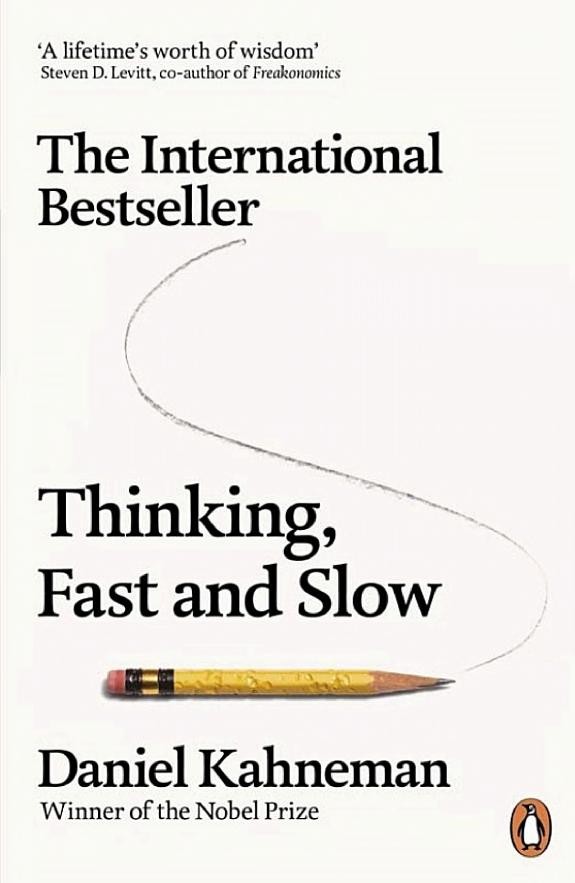
1. Thinking, Fast and Slow by Daniel Kahneman
THE IDEA: Kahneman describes two modes of thought, one fast and intuitive and one slower and more deliberate, and shows how the fast mode can lead to systematic errors. Much of the book is a tour of research on judgement and decision-making.
THE PLAY: Before an important decision, pause and ask which parts of your thinking are quick impressions and which have been checked.
THE 30-DAY TEST: If you like, note down three decisions this month with the reasoning behind them, then review the notes later.
Who it is for: Suits those who want the foundations of the field, written by a leading researcher.
One honest weakness: The book is long and detailed, so it rewards a steady pace, and it is perhaps best read as a broad survey of the field.
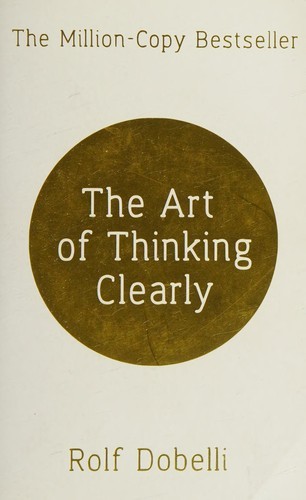
2. The Art of Thinking Clearly by Rolf Dobelli
THE IDEA: Dobelli collects many common thinking errors in short chapters, each with a brief explanation and example.
THE PLAY: Choose one bias per week and look for it in your own decisions.
THE 30-DAY TEST: A chapter a week makes a gentle month, with one note on where the bias showed up.
Who it is for: A good fit if you prefer short, dip-in chapters to a long argument.
One honest weakness: Short chapters mean limited depth, so readers who want the research may prefer to follow up on the topics that interest them.
Method
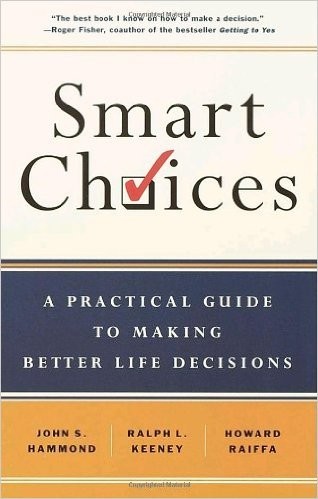
3. Smart Choices by John S. Hammond, Ralph L. Keeney and Howard Raiffa
THE IDEA: A practical guide to making hard choices step by step, it offers a framework that begins with clarifying the problem and your objectives and then moves through alternatives, consequences and trade-offs.
THE PLAY: Take a decision you are weighing and write down your objectives before listing any options.
THE 30-DAY TEST: Apply the framework to one real decision over the month, then note whether it changed your thinking.
Who it is for: Helpful for managers facing complex choices who like a structure to work through.
One honest weakness: A step-by-step method can feel formal for small decisions, so it suits the bigger ones better.
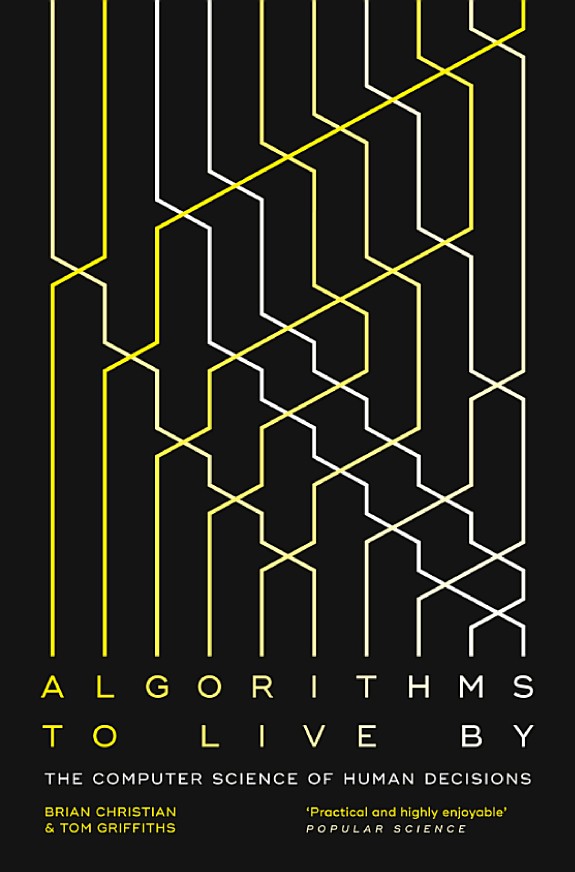
4. Algorithms to Live By by Brian Christian and Tom Griffiths
THE IDEA: The authors apply ideas from computer science, such as when to stop searching and how to balance exploring and exploiting, to everyday choices.
THE PLAY: Next time you search for something, such as a hire or a supplier, decide in advance how many options you will look at before choosing.
THE 30-DAY TEST: Try one rule of thumb from the book on a real choice, and jot down how it went.
Who it is for: A natural choice for people who enjoy ideas from mathematics and computing.
One honest weakness: The book works with clearly defined problems, so applying its ideas to real choices takes some adaptation.
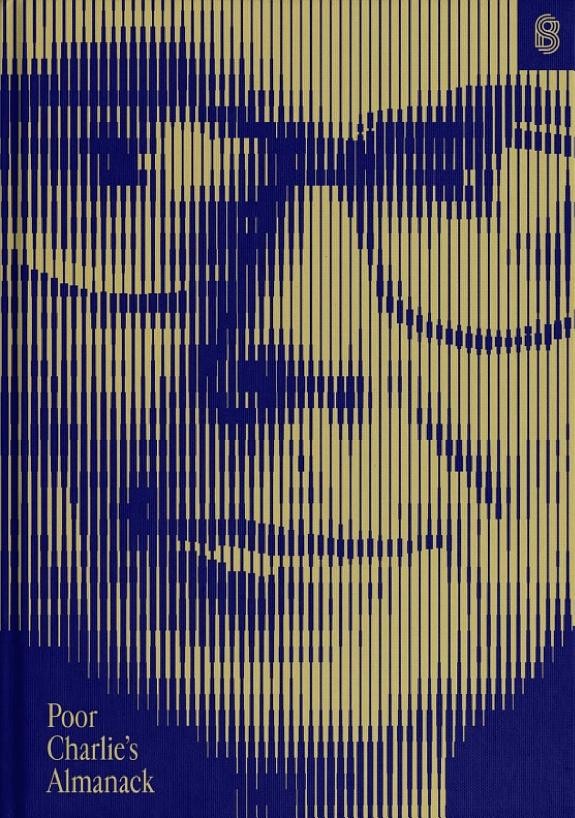
5. Poor Charlie’s Almanack by Charles T. Munger
THE IDEA: This collection of talks, compiled by Peter D. Kaufman, brings together Munger’s thinking, including his idea of drawing on many disciplines, a ‘latticework’ of mental models, when approaching a problem.
THE PLAY: Pick a problem you face and ask what two or three different fields would say about it.
THE 30-DAY TEST: Reading one talk a week and noting one idea to apply would make a good month.
Who it is for: Of interest to those who like investors’ perspectives and wide-ranging ideas.
One honest weakness: It is a collection rather than a single argument, so the pieces vary in length and in how closely they relate to everyday decisions.
Risk
6. Thinking in Bets by Annie Duke
THE IDEA: Duke, a former professional poker player, argues that decisions are made under uncertainty and should be judged on the quality of the thinking, not only on how they turn out. She encourages readers to think in terms of probabilities.
THE PLAY: When you make a decision, write down how confident you are, and what would change your mind.
THE 30-DAY TEST: Record your confidence for a few decisions over the month, then compare it with what happened.
Who it is for: Anyone wanting a practical, lively approach to uncertainty.
One honest weakness: The poker analogies will appeal to some readers more than others, and the book offers principles more than a detailed method.
7. Risk Savvy by Gerd Gigerenzer
THE IDEA: Gigerenzer argues for greater understanding of risk, and for simple rules of thumb that can work well when the future is uncertain. He also suggests that people can learn to read statistics better.
THE PLAY: If a risk statistic comes up, ask what it means in plain numbers, such as how many people out of a hundred.
THE 30-DAY TEST: For a month, restate each risk figure you read in plain numbers and see whether your view shifts.
Who it is for: Good for those interested in risk, statistics and the limits of complex models.
One honest weakness: Some of its arguments challenge more elaborate approaches, so readers may want to weigh it against other views.
Groups
8. Noise by Daniel Kahneman, Olivier Sibony and Cass R. Sunstein
THE IDEA: The authors look at unwanted variability in human judgement, such as different people reaching different conclusions on the same case. They suggest ‘decision hygiene’, a set of practices for reducing noise.
THE PLAY: For repeated judgements, such as scoring candidates, ask people to assess separately before they discuss.
THE 30-DAY TEST: Try independent assessments on one team decision this month and compare the result with your usual approach.
Who it is for: Relevant to leaders who oversee repeated judgements in teams and organisations.
One honest weakness: Some of its suggestions suit large organisations better than small teams.
9. Superforecasting by Philip E. Tetlock and Dan Gardner
THE IDEA: Tetlock and Gardner report on research into forecasters who made unusually accurate predictions, and they describe the habits that seemed to help, such as breaking problems down and updating beliefs.
THE PLAY: Make a forecast with a clear probability and a date, and check it when the date arrives.
THE 30-DAY TEST: A small log of forecasts, each with a probability, makes an easy month-long trial.
Who it is for: Useful if you want to improve how you predict and plan.
One honest weakness: The habits are straightforward to describe but take consistent practice to build.
A suggested reading order
- Begin with Thinking, Fast and Slow or The Art of Thinking Clearly for the basics of how minds err.
- Add Thinking in Bets to learn to separate decision quality from outcomes.
- Read Smart Choices for a practical framework.
- Take on Risk Savvy and Superforecasting for risk, probability and prediction.
- Read Noise if you manage group decisions, and Algorithms to Live By and Poor Charlie’s Almanack for wider ideas.
Related guides on CROWNLEIGH
A few of our other CROWNLEIGH Book Club guides connect closely with this list:
- Two of Kahneman’s books side by side, in our guide to Thinking, Fast and Slow and Noise.
- Forecasting and prediction, in our guide to Superforecasting and The Signal and the Noise.
- Thinking about rare events, in our guide to books like The Black Swan.
- Behaviour and money, in our guide to books like The Psychology of Money.
- Clear thinking about your own beliefs, in our guide to books like Mindset.
You can find all of these, and more as we add them, on our CROWNLEIGH Book Club page.
Frequently asked questions
What is the best book on decision making?
It depends on what you want. For the foundations of how we think, try Thinking, Fast and Slow. For uncertainty and risk, try Thinking in Bets. For a practical framework, try Smart Choices.
How do I make better business decisions?
Several books here suggest similar habits: clarify your objectives first, record your reasoning, consider other views, think in probabilities and review decisions afterwards. Starting with one small habit, such as writing down your reasoning before you know the outcome, is a manageable first step.
What is decision hygiene?
Decision hygiene is a term used in Noise for practices that reduce unwanted variability in judgements, much as hygiene reduces the spread of germs without targeting a particular illness. Examples include having people make independent assessments before discussing them and structuring a judgement into separate parts.
A closing thought
No book can remove uncertainty from decisions, but several can help you notice how you decide. You might choose one habit from these pages, try it on a real decision and review what happened. Over time, a little reflection may help you judge more carefully.
Book links go to Amazon; see our advertising disclosure.