Best Books on Public Speaking and Presenting
Seven books on public speaking and presenting, grouped by structure, storytelling, delivery and pitching, from The Art of Public Speaking and Resonate to Talk Like TED and Pitch Anything, with a four-week rehearsal plan.
Few work skills are as visible, or as often daunting, as speaking in front of other people. Whether you are presenting results to a board, pitching to a client or addressing a team, the difference between a talk that lands and one that is forgotten often comes down to a few learnable things: how the talk is structured, how it is told, how it is delivered and how well you have prepared.
This list gathers seven books on public speaking and presenting and groups them by what they do best: structure, storytelling, delivery and pitching. For each book we give the core idea, a ‘play’, a 30-day test, who it suits and one honest weakness. There is also a quick-pick table, a four-week rehearsal plan, a suggested reading order and some frequently asked questions.
How we chose
We looked for books that offer something practical and that approach speaking from different directions: classic technique, modern storytelling, memorable ideas and the demands of a pitch. We included a mix of older and newer books so that you can compare approaches. The list has seven books, and the quick-pick table can help you choose a place to start.
Quick-pick table
| If you want… | Start with | Focus |
|---|---|---|
| A thorough grounding in technique | The Art of Public Speaking | Structure |
| Lessons from famous speakers | Speak Like Churchill, Stand Like Lincoln | Structure |
| To shape a talk as a story | Resonate | Storytelling |
| Ideas that people remember | Made to Stick | Storytelling |
| To learn from popular talks | Talk Like TED | Delivery |
| To make a persuasive pitch | Pitch Anything | Pitching |
| Short phrases for everyday conversations | Exactly What to Say | Pitching |
Feeling nervous before speaking is very common, and it does not mean you will speak badly. Several of these books suggest that preparation, practice and a clear purpose can help, and that it is often useful to focus on the audience rather than on yourself. If nerves are a serious difficulty for you, a speaking group, a coach or a health professional can offer support that a book cannot.
Structure
1. The Art of Public Speaking by Stephen E. Lucas
THE IDEA: This guide to speaking covers topics such as choosing a subject, organising a speech, understanding your audience and delivery. It reads like a textbook, with a systematic approach.
THE PLAY: If you have a talk coming up, you could write down the single main point you want the audience to take away and build the outline around it.
THE 30-DAY TEST: Over a month, you could outline one talk a week using the book’s structure and compare the versions.
Who it is for: Readers who want a thorough grounding in the fundamentals.
One honest weakness: Its textbook style is detailed and can feel formal, so some readers will want to dip into the sections that matter most.
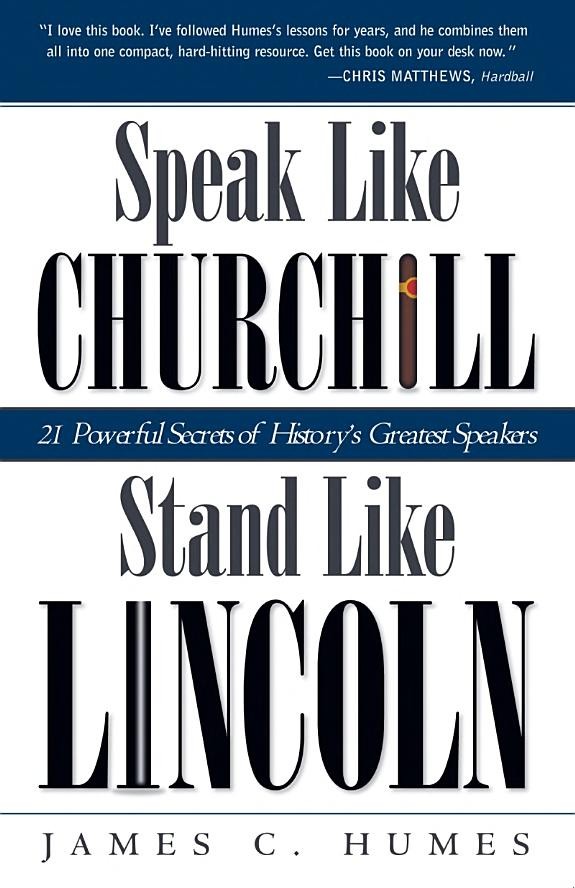
2. Speak Like Churchill, Stand Like Lincoln by James C. Humes
THE IDEA: Humes, who worked as a speechwriter, draws lessons for speakers from well-known leaders, organised as a set of practical tips.
THE PLAY: One tip is enough to start with, such as opening with a short, vivid line.
THE 30-DAY TEST: A tip a week is a comfortable pace, and you can keep a note of which ones work for you.
Who it is for: A good fit for readers who like practical tips and historical stories.
One honest weakness: The approach is anecdotal, so it is best read as a source of ideas rather than a complete method.
Storytelling
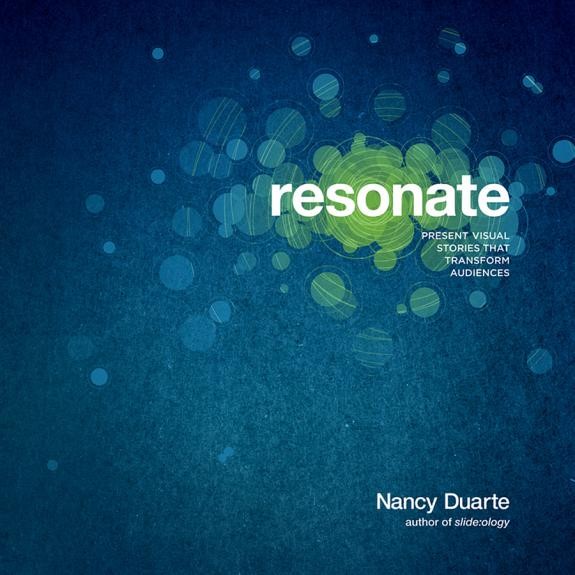
3. Resonate by Nancy Duarte
THE IDEA: Duarte’s approach treats a presentation as a story, with the audience as the hero of the journey and the speaker as a guide.
THE PLAY: Consider where your audience is now and the change you want for them, then sketch your talk around that gap.
THE 30-DAY TEST: You could rework one existing presentation as a story over the course of a month, then ask a colleague what they remember afterwards.
Who it is for: Suits professionals who give presentations with slides and want them to be more engaging.
One honest weakness: It is a book about design and structure, so readers wanting advice on voice and delivery will need another source.
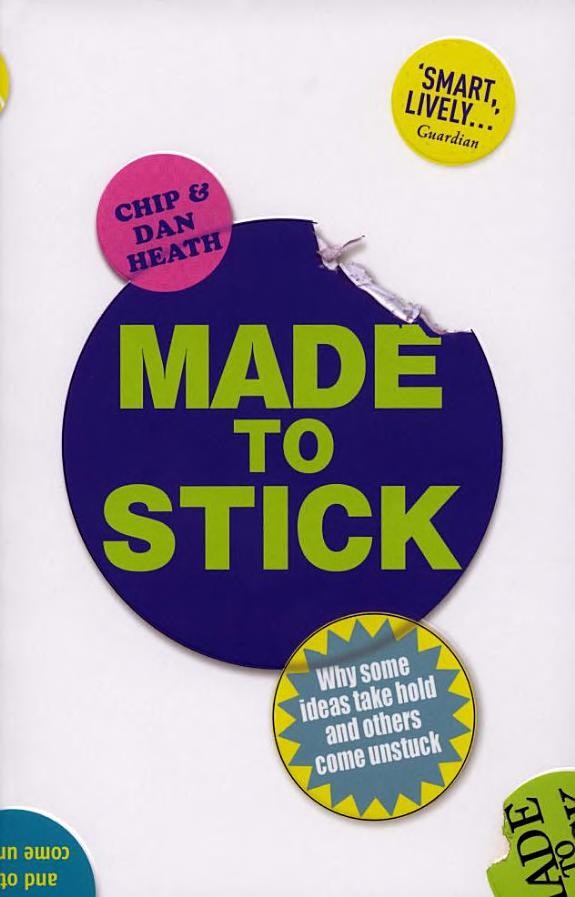
4. Made to Stick by Chip Heath and Dan Heath
THE IDEA: The Heaths set out why some ideas are remembered and others are not, with a six-part framework: simple, unexpected, concrete, credible, emotional and stories.
THE PLAY: Reduce your message to one sentence, then add one concrete example that a listener could picture.
THE 30-DAY TEST: Each week, try one message on a friend and ask what they remember a day later.
Who it is for: Useful for anyone who needs to explain ideas clearly, whether in speeches, teaching or writing.
One honest weakness: It is about ideas in general rather than speaking in particular, so it works best alongside a book on delivery.
Delivery
5. Talk Like TED by Carmine Gallo
THE IDEA: Gallo draws on many TED talks and on interviews with speakers and researchers, highlighting themes such as storytelling, emotion and keeping talks concise.
THE PLAY: Pick a talk you admire and notice what the speaker does in the first minute and the last.
THE 30-DAY TEST: Watching one talk a week and noting one technique to borrow makes a gentle month.
Who it is for: Speakers addressing larger audiences who want ideas for engaging them.
One honest weakness: The model of a polished TED-style talk will not suit every setting, such as a routine team meeting.
Pitching
6. Pitch Anything by Oren Klaff
THE IDEA: Klaff focuses on pitching to investors and describes a method built on managing attention and framing. It is aimed at high-stakes situations where you need to hold a room.
THE PLAY: You might decide on the one thing you want the listener to remember and open with that.
THE 30-DAY TEST: Prepare a three-minute pitch for something you are working on and, if you like, ask a trusted colleague for feedback.
Who it is for: Founders, sellers and executives who pitch ideas.
One honest weakness: The approach is intended for high-stakes pitching, so readers may want to adapt it to a gentler tone for everyday presentations.
7. Exactly What to Say by Phil M. Jones
THE IDEA: The book offers short phrases, which Jones calls ‘magic words’, aimed at persuasion in sales and everyday conversations.
THE PLAY: If you like, take one phrase that feels natural to you and try it in an ordinary conversation.
THE 30-DAY TEST: Trying one phrase a week and noting how people respond is plenty.
Who it is for: Readers who like short, practical books with phrases to try.
One honest weakness: Scripted phrases work best when they sound like you, so adapt them rather than reciting them.
A four-week rehearsal plan
Whichever book you choose, the most reliable improvement comes from practice. Here is a simple plan you can adapt for a talk you have coming up.
- Week 1, shape it: Write the one-sentence message and the outline. Cut anything that does not support the message.
- Week 2, say it aloud: Rehearse the talk out loud, alone, and time it. Revise the parts that feel awkward.
- Week 3, test it: Present to a friendly colleague or friend and ask what they remember and what they would change.
- Week 4, polish it: Rehearse in the room if you can, check any slides or equipment and plan the first and last minute.
A suggested reading order
- Begin with Made to Stick or Resonate to think about your message and story.
- Read The Art of Public Speaking for solid fundamentals.
- Add Talk Like TED and Speak Like Churchill, Stand Like Lincoln for ideas on delivery and style.
- Read Pitch Anything if your work involves pitching to investors or clients.
- Keep Exactly What to Say for short phrases you can adapt to your own voice.
Related guides on CROWNLEIGH
A few of our other CROWNLEIGH Book Club guides connect closely with this list:
- Presence and charm, in our guide to the best books on charisma and charm.
- Why some ideas spread, in our guide to Hooked and Contagious.
- Persuading others, in our guide to To Sell Is Human and The Psychology of Selling.
- How persuasion works, in our guide to Influence and Pre-Suasion.
- More on people skills, in our guide to books like How to Win Friends and Influence People.
You can find all of these, and more as we add them, on our CROWNLEIGH Book Club page.
Frequently asked questions
What is the best book on public speaking?
It depends on what you want to improve. For fundamentals, try The Art of Public Speaking. For storytelling, try Resonate or Made to Stick. For ideas on delivery, try Talk Like TED.
How can I overcome fear of public speaking?
Most people feel some nerves. Common suggestions include preparing thoroughly, rehearsing aloud, focusing on what the audience needs and starting with smaller, friendlier groups. Our rehearsal plan above is one way to build practice step by step. If the fear is severe, a coach, a speaking group or a health professional may be able to help more than a book.
Which book is best for pitching?
Pitch Anything is written for pitching to investors and is the closest match on this list. Resonate and Made to Stick are useful if you want your pitch to be clear and memorable, and they can be read alongside it.
A closing thought
Good speaking is mostly preparation, a clear message and respect for the audience’s time. You might choose one idea from these books, rehearse it aloud and see what you notice. A little steady practice can often do more than any single technique.
Book links go to Amazon; see our advertising disclosure.