Product and UX Books Every Founder Should Read
Seven product and UX books for founders who are not designers, from Don’t Make Me Think and The Mom Test to Inspired, Sprint and Hooked, each with the idea, a play and a 30-day test.
Many founders find themselves responsible for a product without a background in design or product management. The good news is that the core ideas are teachable: how to learn what customers need, how to test an idea cheaply, how to make a product clear to use and how to decide what to build next. A small group of books covers these ideas in plain language, and you do not need to be a designer to benefit from them.
This list gathers seven product and UX books suited to a non-designer founder. For each we give the core idea, a ‘play’, a 30-day test and who it suits. There is also a quick-pick table, a suggested reading order and some frequently asked questions.
How we chose
We looked for books that are practical and readable, that suit founders and product people and that cover different parts of the job: talking to customers, usability, design process, product discovery and building habits. We favoured readable books over academic ones. The list has seven books, and the quick-pick table can help you choose a starting point.
Quick-pick table
| If you want… | Start with | Focus |
|---|---|---|
| To learn from customers without fooling yourself | The Mom Test | Customer conversations |
| A fast guide to usable websites and apps | Don’t Make Me Think | Usability |
| To understand why things are easy or hard to use | The Psychology of Everyday Things | Design principles |
| A framework for building products people come back to | Hooked | Habit and engagement |
| A way to test ideas in five days | Sprint | Design process |
| A step-by-step route to product-market fit | The Lean Product Playbook | Product strategy |
| How strong product teams work | Inspired | Product management |
You do not need to draw well or know design software to apply these books. Most of the value comes from habits that anyone can build: talking to real customers, watching people use your product, writing down your assumptions and testing them with small experiments before you commit to large builds.
Customers and learning
1. The Mom Test by Rob Fitzpatrick
THE IDEA: Fitzpatrick explains how to talk to customers so that you learn useful things, even when people want to be kind. The central idea is to ask about their lives and past behaviour rather than pitching your idea and asking if they like it.
THE PLAY: Before a customer conversation, write down three things you want to learn, and avoid mentioning your idea until you have listened.
THE 30-DAY TEST: Hold a handful of short customer conversations over the month, and note the facts you heard separately from the compliments.
Who it is for: Suits early-stage founders who are testing an idea and want candid answers.

2. Inspired by Marty Cagan
THE IDEA: Cagan describes how successful product teams discover what to build, with an emphasis on testing ideas with customers and combining product, design and engineering perspectives. It is aimed at product managers and leaders.
THE PLAY: Pick one idea you are keen on and list the riskiest assumptions behind it, such as whether customers want it and whether you can build it.
THE 30-DAY TEST: Take one assumption and design the smallest possible test for it within the month.
Who it is for: Founders building a product team, and anyone moving into product leadership.
3. The Lean Product Playbook by Dan Olsen
THE IDEA: Olsen offers a step-by-step process for finding product-market fit, built around defining target customers and their needs, testing a minimum viable product and iterating. A pyramid model ties the steps together.
THE PLAY: Try writing one sentence describing your target customer and the problem you solve for them, and test it with someone who fits the description.
THE 30-DAY TEST: If time allows, work through one step of the process each week and note what you learn.
Who it is for: A good match for founders who like a clear sequence of steps.
Usability and design
4. Don’t Make Me Think by Steve Krug
THE IDEA: Krug’s short guide to usability argues that a good website or app should be self-evident, since people tend to scan rather than read. It offers simple, common-sense advice and suggests testing with a few users.
THE PLAY: Ask a friend to try to complete one task on your product while you watch silently, and note where they hesitate.
THE 30-DAY TEST: Watch up to three people try one task, and repeat if you like.
Who it is for: Non-designers who want quick, practical advice on making a product clearer.
5. The Psychology of Everyday Things by Donald A. Norman
THE IDEA: Norman looks at why everyday objects are easy or hard to use, introducing ideas such as affordances, feedback and the gulfs between what a person wants to do and what a product lets them do and see. It later appeared under the title The Design of Everyday Things.
THE PLAY: The next time something is hard to use, ask what the design is telling you to do and what it fails to tell you.
THE 30-DAY TEST: Collect examples of confusing and clear design that you meet during the month, and note what made each work.
Who it is for: Readers who want a grounding in the principles behind good design.
Process and habits
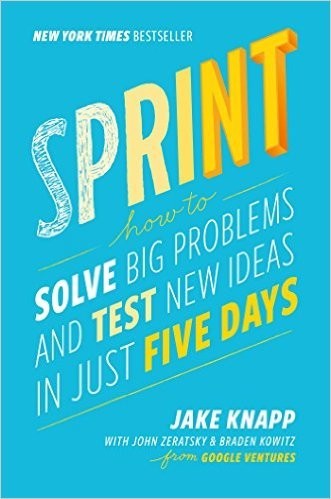
6. Sprint by Jake Knapp, with John Zeratsky and Braden Kowitz
THE IDEA: Sprint sets out a five-day process for answering big questions through design, prototyping and testing with customers. The method was developed at Google Ventures.
THE PLAY: Choose a single, specific question about your product that you would like answered quickly.
THE 30-DAY TEST: If it suits your team, adapt the sprint to a shorter version for one question this month.
Who it is for: Teams that want to test an idea quickly instead of debating it for weeks.

7. Hooked by Nir Eyal
THE IDEA: Eyal presents the ‘Hook Model’, a four-step cycle of trigger, action, variable reward and investment, to explain how some products become habits. Some readers value it as a way to build products people find useful; others raise questions about designing habits, so it helps to weigh both views as you read.
THE PLAY: Describe in four steps how a customer comes back to your product, and consider whether the habit serves them as well as you.
THE 30-DAY TEST: Map the Hook Model onto one product you use and one you are building, and write down the differences.
Who it is for: Makers of consumer or subscription products who want to think about habits and how to weigh them responsibly.
A 30-day plan for a non-designer founder
If you would rather practise than read, here is a simple plan that draws on several of these books. Adapt it to your product and your time.
- Week 1, listen: Hold three short conversations with people who match your target customer, using the approach in The Mom Test. Note facts and past behaviour, not compliments.
- Week 2, watch: Ask three people to try one key task on your product while you watch silently, as Don’t Make Me Think suggests. Write down where they hesitate.
- Week 3, choose: List your riskiest assumptions, as in Inspired, and pick the one that matters most to test next.
- Week 4, test: Design the smallest test you can for that assumption, run it and write down what you learned and what you will change.
A suggested reading order
- Begin with The Mom Test to learn how to listen to customers.
- Read Don’t Make Me Think for quick wins in usability.
- Add The Lean Product Playbook for a route to product-market fit.
- Read Inspired when you are building a product team.
- Try Sprint to test big questions fast, and Hooked if habit and engagement matter to your product.
- Read The Psychology of Everyday Things for the deeper principles behind all of it.
Related guides on CROWNLEIGH
A few of our other CROWNLEIGH Book Club guides connect closely with this list:
- Building habits into products, in our guide to Hooked and Contagious.
- Learning from customers and experiments, in our guide to Rework and The Lean Startup.
- Starting something new, in our guide to Zero to One and The Lean Startup.
- Taking a product to market, in our guide to Crossing the Chasm and The Innovator’s Dilemma.
- Talking with buyers, in our guide to The Challenger Sale and SPIN Selling.
You can find all of these, and more as we add them, on our CROWNLEIGH Book Club page.
Frequently asked questions
What is the best book for product managers?
Inspired is written for product managers and leaders, and The Lean Product Playbook offers a practical step-by-step process. For talking to customers, The Mom Test is a good companion.
Is Don’t Make Me Think still relevant?
Its main ideas, that people scan rather than read and that a product should be as self-evident as possible, still apply, and its advice to test with a few real users is still practical. Technology has changed since it was first written, so it is sensible to read it for the principles and apply them to today’s screens and devices.
Which UX book is best for beginners?
Don’t Make Me Think is a common starting point because it is short and practical. The Psychology of Everyday Things is a good next step if you want to understand the principles behind good design.
A closing thought
The common thread in these books is to learn from real people before and while you build. You might choose one idea, such as watching a friend use your product, and see what it shows you. Small, regular observations often reveal more than a long list of opinions.
Book links go to Amazon; see our advertising disclosure.